Black Coolie Loach: Complete Care Guide (Pangio oblonga)
Complete black coolie loach care guide: tank size, sand substrate, group size, diet, lifespan, and why the bandless Pangio oblonga is hard to breed.
The black coolie loach (Pangio oblonga) is a peaceful, eel-shaped bottom dweller that needs a 20-gallon tank, soft sand, and a group of at least five or six. It is the solid, bandless cousin of the striped kuhli loach and can live 8 to 14 years when cared for properly. This guide covers tank size, water parameters, diet, tankmates, and why captive breeding is so rare.
Updated 2026. These recommendations follow current species profiles from Seriously Fish, AquariumStoreDepot, and Fast Aquatics.
What Is a Black Coolie Loach?
A black coolie loach is the common aquarium name for Pangio oblonga, a small, eel-shaped loach from Southeast Asia. In stores you may also see it sold as the Black Kuhli loach, Java loach, chocolate kuhli, or cinnamon loach. All of those names usually refer to the same species.
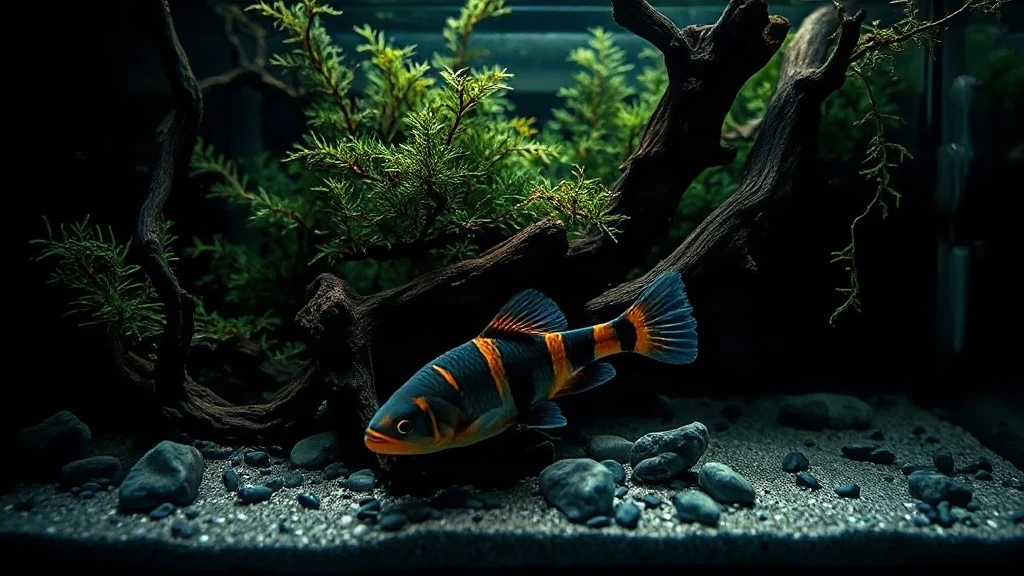
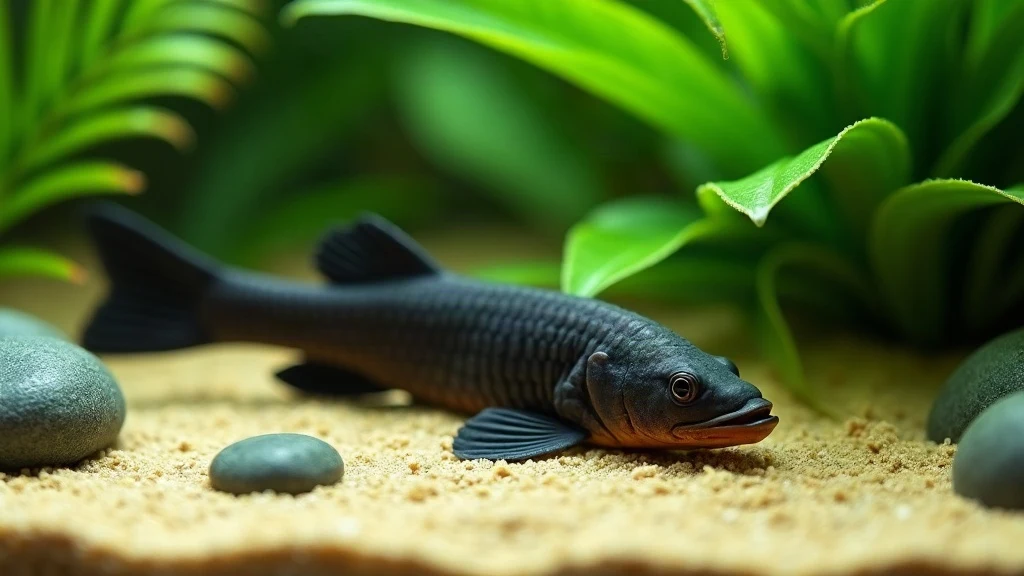
The key identification point is color. Pangio kuhlii, the classic banded kuhli loach, has bold vertical stripes on a pinkish to orange body. The true Pangio oblonga is a uniform dark brown to near black fish with no bands at any age. The belly is sometimes lighter, from dark tan to gray, but the overall impression is a solid dark, eel-shaped fish.
This species was first described by Achille Valenciennes in 1846. Ichthyologists often call the group eel loaches because of the long, slender body and the dorsal fin placed well behind the pelvic fins. Seriously Fish notes that Pangio species often pack themselves into a single nook when resting, which is why you should never keep them alone.
What Are the Key Black Coolie Loach Facts?
A healthy black coolie loach stays under 4 inches and needs a group, sand, and stable warm water.
| Care factor | Recommended range | Source (2026) |
|---|---|---|
| Scientific name | Pangio oblonga (Valenciennes, 1846) | AquariumStoreDepot |
| Maximum size | 3.2 to 3.5 inches (8 to 9 cm) | AquariumStoreDepot, Fast Aquatics |
| Minimum tank | 20 gallons (76 liters), long footprint | AquariumStoreDepot, TankFlare |
| Temperature | 21 to 26 C (70 to 79 F) | AquariumStoreDepot |
| pH | 5.5 to 7.0 | AquariumStoreDepot, Serously Fish |
| Hardness | 0 to 8 dGH | AquariumStoreDepot |
| Lifespan | 8 to 14 years | AquariumStoreDepot, Fast Aquatics |
| Group size | At least 5 to 6 | Serously Fish, AquariumStoreDepot |
| Breeding difficulty | Difficult, rarely documented | AquariumStoreDepot |
What Size Tank Does a Black Coolie Loach Need?
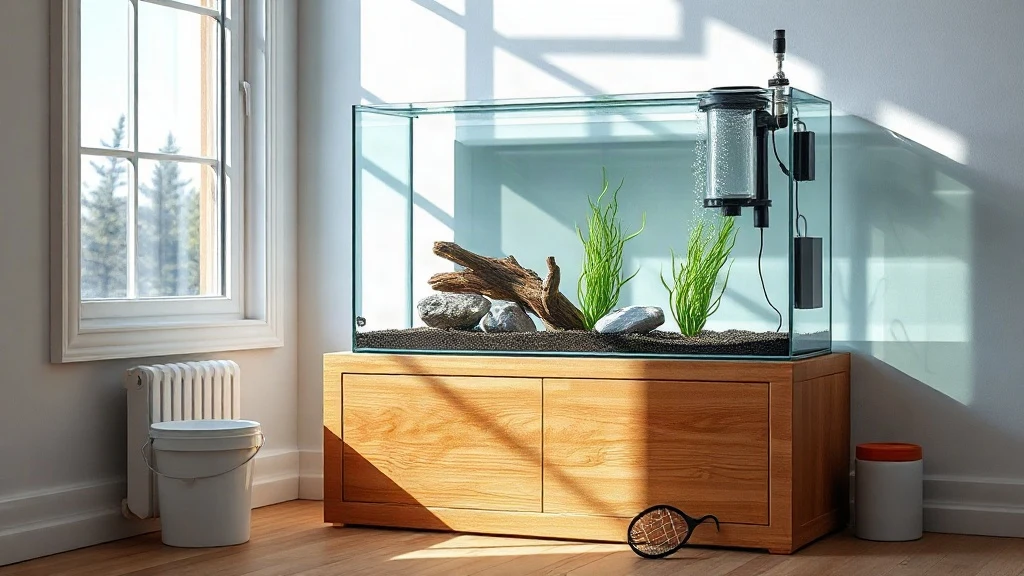
Black coolie loaches need a 20-gallon long tank at minimum, and a longer horizontal footprint is always better than a tall one.
In a longer tank, a group of five or six fish can establish separate hiding spots and forage without crowding. Seriously Fish recommends a base of at least 60 by 30 cm (about 24 by 12 inches) for a small group. If you want a group of eight to ten, move up to a 30-gallon or larger tank.
Use a soft, sandy substrate. Sand is non-negotiable because this fish burrows and sifts mouthfuls of substrate through its gills. Coarse gravel can damage its barbels and skin and cause stress. Fine sand, such as pool filter sand or aquarium sand, works best.
Set up the tank with driftwood roots, branches, and dried leaf litter to create shady spots. Keep the lighting fairly dim. Plants like Microsorum, Taxiphyllum, and Cryptocoryne grow well under these conditions. Use gentle filtration with low flow. A filter that moves about four to five times the tank volume per hour is enough, but avoid strong currents.
Cover the tank well. Most loaches jump when introduced to a new environment, and small fish can also get into filter intakes, so use a mesh intake guard.
What Water Parameters Do Black Coolie Loaches Need?
Black coolie loaches prefer warm, soft, slightly acidic water and do best when conditions stay stable.
- Temperature: 21 to 26 C (70 to 79 F)
- pH: 5.5 to 7.0
- Hardness: 0 to 8 dGH
These fish are sensitive to poor water quality, so test regularly and change 20 to 30 percent of the water weekly. Avoid sudden swings in pH or temperature. Because the fish are scaleless, dose medications at half strength and avoid copper-based treatments without expert guidance.
What Do Black Coolie Loaches Eat?
Black coolie loaches are micropredators that spend hours sifting sand for small insects, crustaceans, and organic matter.
Offer sinking dried foods as a staple. Supplement with live or frozen Daphnia, Artemia, bloodworm, microworm, and grindal worm. A good feeding routine is one small meal at dusk or after lights out, because these fish are noctural.
Chiefly a micropredator sifting mouthfuls of substrate through the mouth and gills from which insect larvae, small crustaceans and suchlike are extracted.
Source: Seriously Fish species profile for Pangio oblonga
Which Fish Make Good Black Coolie Loach Tankmates?
Black coolie loaches are peaceful and get along with any non-aggressive fish that will not eat them or compete for the bottom.
Seriously Fish reports no cases of these loaches harming tankmates, though they may eat eggs or fry. Good tankmates include ember tetras, galaxy rasboras, otocinclus catfish, small gouramis, and peaceful bottom dwellers. Avoid large cichlids, aggressive barbs, crayfish, and any fish big enough to swallow a 3-inch loach.
Keep at least five or six black coolie loaches together. A single loach hides constantly and shows stressed behavior. In a group, they rest in piles inside caves and become far more active. For a different small oddball in a compact tank, see our 5-gallon pea puffer tank set up guide, though pea puffer fish should not share a tank with kuhli loaches.
How Is a Black Coolie Loach Different From Other Kuhli Loaches?
The easiest way to tell the black coolie loach from a banded kuhli is the pattern: the true Pangio oblonga has no bands, while Pangio kuhlii is boldly striped.
Juvenile kuhli loaches are sometimes sold before their stripes appear, which leads to confusion. A true black coolie loach never develops bands, no matter its age. The closely related Pangio pangia looks similar but is longer and slimmer, with a body depth that fits more times into the standard length.
| Feature | Black coolie loach | Band ed kuhli loach | Golden kuhli loach |
|---|---|---|---|
| Common scientific name | Pangio oblonga | Pangio kuhlii | Color variety of Pangio kuhlii |
| Body pattern | Solid dark brown to black, never bands | Pinkish to orange with bold dark vertical bands | Yellow to copper body with lighter bands |
| Adult size | 3.2 to 3.5 inches | About 3 to 4 inches | About 3 inches |
| Care level | Easy to moderate | Easy to moderate | Easy to moderate |
In stores, look for the name Java loach or chocolate kuhli when buying a black coolie loach, and check that the body is solid. If you see stripes on the side, it is not Pangio oblonga.
Can You Breed Black Coolie Loaches at Home?
Black coolie loach breeding is difficult, and very few successful home aquarium spawns have been documented.
The species is an egg scatterer, but spawning behavior is almost never seen in captivity. Most black coolie loaches sold by stores are wild-caught, and the few reports of captive fry were accidental discoveries in mature tanks. Some hobbyists found partially grown fry among large gravel without ever observing adults spawning.
To improve the odds, condition a group with live and frozen foods, keep water soft and acidic, and offer plenty of cover. Even then, do not expect reliable breeding. This is one reason the fish remains relatively uncommon when compared with farm-raised species.
What Are the Most Common Black Coolie Loach Mistakes?
Most black coolie loach problems come from set up errors, not from the fish itself.
- Using gravel or coarse substrate, which damages barbels and prevents burrowing.
- Keeping one or two loaches alone, which makes them hide permanently.
- Using bright lighting with no shaded areas.
- Running a strong filter that pushes the fish around.
- Leaving the tank open, which invites jumping accidents.
- Feeding only dry flake food without live or frozen protein.
Fix these six mistakes and the fish are generally hardy and easy to keep. For more background on building planted tanks and filtering water correctly, visit the Aquarium Care category at Fish Tank Guide Hub.
Black Coolie Loach FAQ
Are black coolie loaches the same as kuhli loaches?
They are close relatives but not the same species. The black coolie loach is Pangio oblonga and has a solid dark body. The striped kuhli loach is usually Pangio kuhlii and has bold bands.
How big do black coolie loaches get?
Healthy adults reach about 3.2 to 3.5 inches (8 to 9 cm) in length.
Do black coolie loaches need sand?
Yes. Sand is essential for burrowing and sifting, and gravel can damage the barbels.
How many black coolie loaches should I keep?
Keep at least five or six together. Larger groups behave more naturally.
Can a black coolie loach live in a 10-gallon tank?
No. A 20-gallon long tank is the practical minimum for a group.
Is breeding black coolie loaches possible at home?
It is difficult and rare. Most documented cases were accidental discoveries of fry in mature tanks.
Next story
How Long Do Betta Fish Live? Lifespan and Care Guide 2026
how long do betta fish live Betta fish live 2 to 5 years on average. Learn what affects betta lifespan, common mistakes, and care tips to help yours live longer. Updated